Foundation Repair in Sanford, NC
Sanford, NC is the county seat of Lee County, about 34 miles north-northwest of downtown Fayetteville, NC as the crow flies. Foundation Repair Fayetteville NC takes requests from homeowners there. Describe the crack, the sloping floor or the door that sticks, and we pass your note to a local foundation specialist who can come and take a look.
Not sure if we cover your area? Check now ↓
Request a Foundation Estimate
Four quick fields. A local foundation specialist follows up to set the visit.
One independent local foundation specialist receives your request and takes care of the visit, the written estimate and any repair; we never inspect, price or guarantee the work ourselves. How this works: Referral Marketing Disclosure.
Foundation Repair Around Sanford, NC
Sanford was incorporated in 1874 and named for C.O. Sanford, a railroad civil engineer; the older town of Jonesboro merged into it in 1947. The city has 16 National Register listings, among them the Lee County Courthouse, the Downtown Sanford Historic District and the Temple Theatre, and US 1, 15, 421 (Horner Boulevard) and 501 all pass through. The 2020 Census counted 30,261 residents. The July 2025 estimate is 34,138, about an eighth more people, on 29.31 square miles of land.
A Mid-Century Core With Steady Newer Growth
Census survey data count about 12,531 homes in Sanford, with a median year built of about 1985. About 44% predate 1980, about 36% went up from the 1950s through the 1970s, and about 28% between 2000 and 2019; about 64% are single-family detached. Owners live in 53.3% of homes, the median owner value is $245,400 and the median household income $57,586 (Census). That is about 6,050 owner-occupied homes, the largest owner base of the five communities we serve outside Fayetteville.
Services for Homes in Sanford
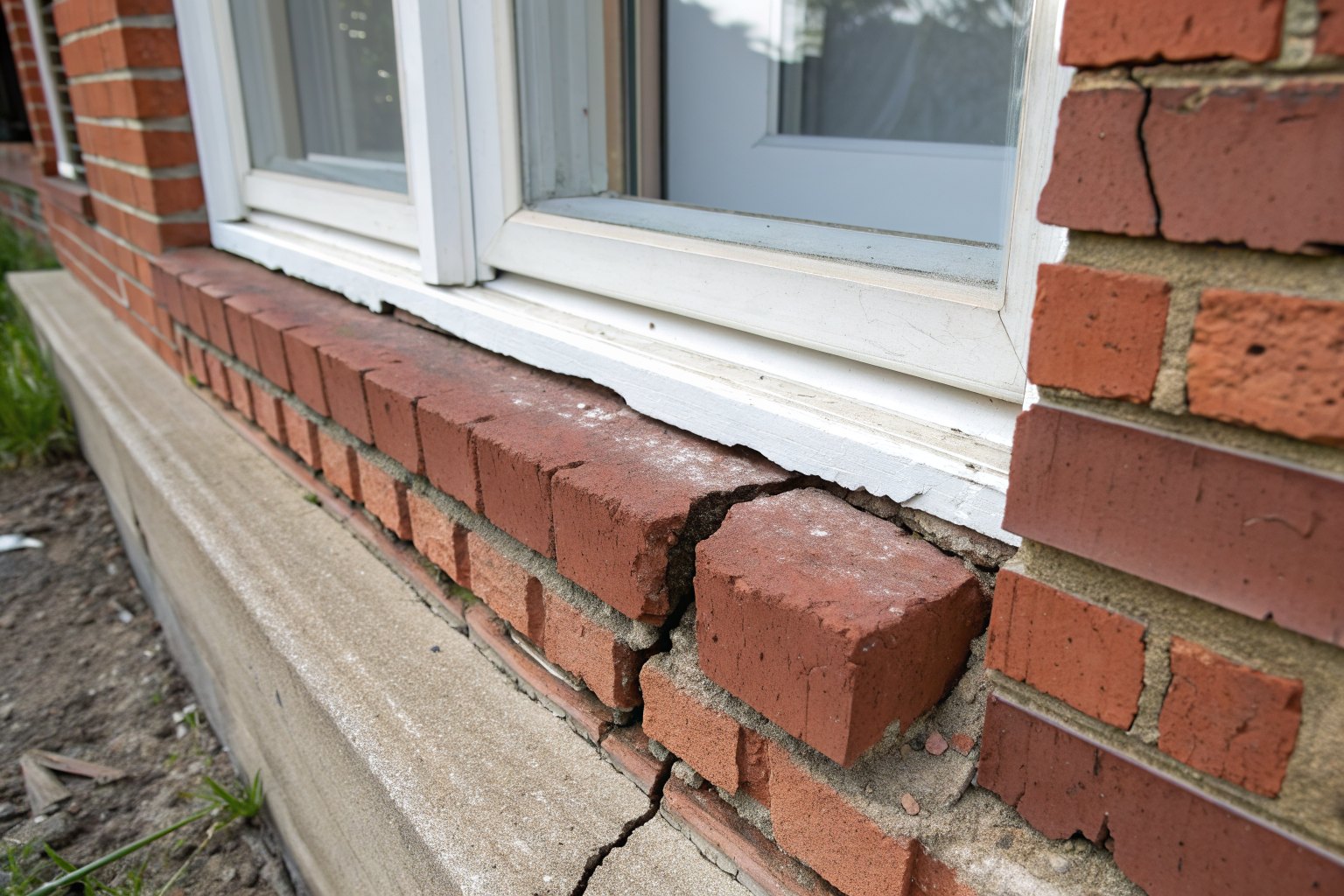
- Lines in brick veneer or block. Our foundation crack repair guide looks at stair-step cracks and which gaps are worth measuring.
- A corner that has dropped. Our foundation repair overview sets steel piers beside concrete ones.
- Floors above a crawl space. Bouncy boards and tired posts are the subject of our Crawl Space & Pier and Beam Repair page.
- Slab and garage floors. Settled edges and cracked tile are explained under slab foundation repair.
- Rooms that feel out of level. House leveling walks through shims, posts and why water gets handled first.
Sand, Clay and Long Rains Around Sanford, NC
Local history credits Sanford's "Brick Capital of the USA" nickname to the place where white beach sand meets Piedmont clay, a pairing that suited brick making; by 1959 the city turned out about 10% of the bricks made in the United States. That boundary still shapes the ground: clay soils of the Piedmont edge, with sand on top in places, and in spots a sandy layer above clay subsoil that can hold onto water after a heavy rain.
All of Sanford lies in the Cape Fear River watershed. Little Buffalo Creek, a Deep River tributary, runs north through the city center, and Big Buffalo Creek drains the west side. During Hurricane Florence in September 2018, a gauge about six miles north of Sanford logged 8.48 inches (NWS), far less than Fayetteville saw but still a long soaking. Afterward, a walk around the house to spot new cracks or sticky doors is time well spent.
Who Issues Permits in Sanford, NC
One joint office handles permits and inspections for Sanford and the rest of Lee County: the City of Sanford/Lee County Inspections Division, located at 115 Chatham Street (919-718-4654). The City says a property owner or a licensed contractor can obtain a building permit, so settle early on who will apply.
North Carolina's small-job permit exemption stops short of work on the load-bearing parts of a house, and a foundation carries all of it, so foundation repair needs a permit at any price. Ask the Inspections Division what it expects to see, including whether a licensed professional engineer ought to design the fix.
State law also calls for a licensed general contractor once a project reaches $40,000. For a job at that level, ask the specialist for its license number, then look the number up with the NC Licensing Board for General Contractors. Under $40,000 the license law stays out of it, which leaves the checking to you, and every job deserves a written contract. If the work touches a sump, drain or wiring, ask who handles that piece; in North Carolina it takes a licensed plumber or electrician.
Planning Figures, Not Prices
No one publishes a foundation repair figure for Sanford alone, or for North Carolina as a whole. The Fayetteville-area row is the nearest local number: one cost site's 2024 average for Fayetteville, NC, not a Sanford figure. The other rows are national. Read them as a planning range, not a quote or bid; none is a price of ours.
| Cost row | Figure | Source (year) |
|---|---|---|
| Fayetteville-area foundation repair | average about $2,700; minor jobs from about $1,800; complex jobs $6,800 or more | This Old House (2024) |
| Typical foundation repair, national | about $2,224 to $8,134 (average about $5,179) | This Old House (2026) |
| Piers, per pier | about $1,000 to $3,000 | This Old House (2026) |
| Structural engineer's report | about $500 to $1,000 | This Old House (2026) |
Our cost calculator sketches a pier-based range, while the foundation repair cost guide breaks down each row.
What Makes Sanford Soil Tricky
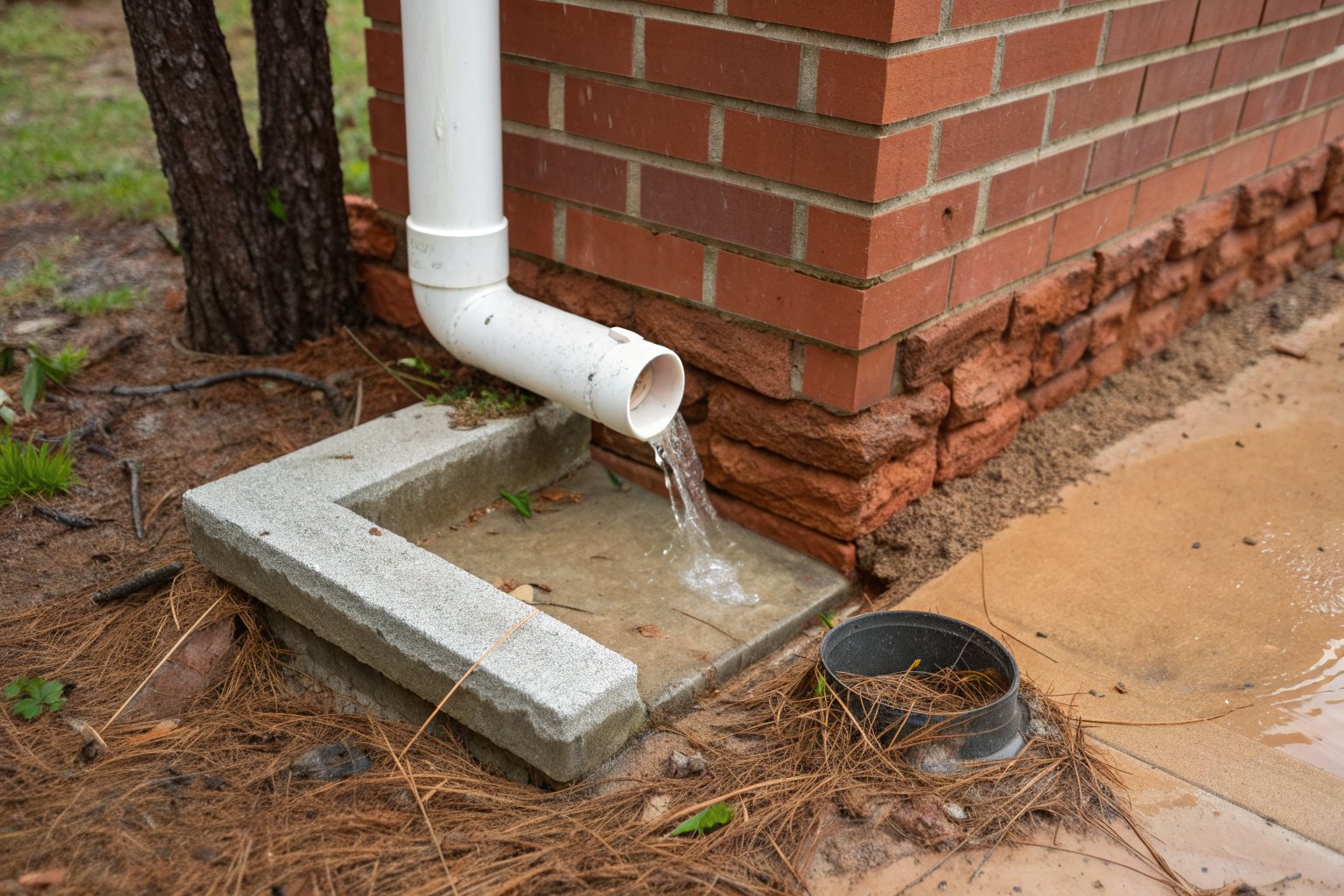
Clay that stays wet after a long rain and then dries out can let the ground under a footing shift a little. Everyday things decide how much water reaches it: downspouts emptying against the wall, a yard that tilts toward the house, a leaking pipe under the floor and big trees close by pulling water from the subsoil. Every item here can move a foundation, and none is proof that yours has.
Is Your Sanford, NC Street on Our Map?
Type your street address in the box to see whether we take requests there. The warning-signs quiz below it runs through five short questions and ends with a plain, unhurried suggestion.
Questions Heard Around Sanford
Can a homeowner pull the permit in Sanford?
The City says a property owner or a licensed contractor can obtain a building permit. Whoever pulls it answers for the plans and inspections. Ask the specialist who will apply, and talk to the Inspections Division first if you plan to do it yourself.
Does the "Brick Capital" nickname mean the soil here is bad for houses?
No. The nickname comes from sand meeting clay, which made good brick, and it says nothing about any single lot. Clay that holds water and then dries can shift, which is why gutters and grading matter. The specialist reads your house, not the city's history.
Our house was built in the 1950s. Is it more likely to have problems?
Age alone doesn't decide it. An older home has had more years of rain, roots and plumbing, so small cracks are common and often stable. What matters is change: a crack growing, a floor starting to slope, doors beginning to bind. Pencil the date beside a crack and check it again next season.
If I finance the job, can I still back out after signing?
Sometimes. When a financed job was sold to you in person at your home, North Carolina generally lets you back out in writing before midnight on the third business day after you sign. Many contracts carry no such right, so read the cancel terms in yours first. This is general information, not legal advice.
Also Served Near Sanford
To the southwest, the Village of Pinehurst, NC holds mostly newer homes on deep sand, to the southeast Dunn, NC has the oldest houses on our map, and our homepage explains what happens after a request is sent.
Get Your Sanford Home Inspected
If you'd like a trained eye on what you've noticed, send a short request with the year the house was built, if you know it, whether it sits on a slab or over a crawl space, and what caught your attention. There's no cost to send it. We pass it to a local foundation specialist, who sets up any visit and writes any estimate; the choice after that is yours.